


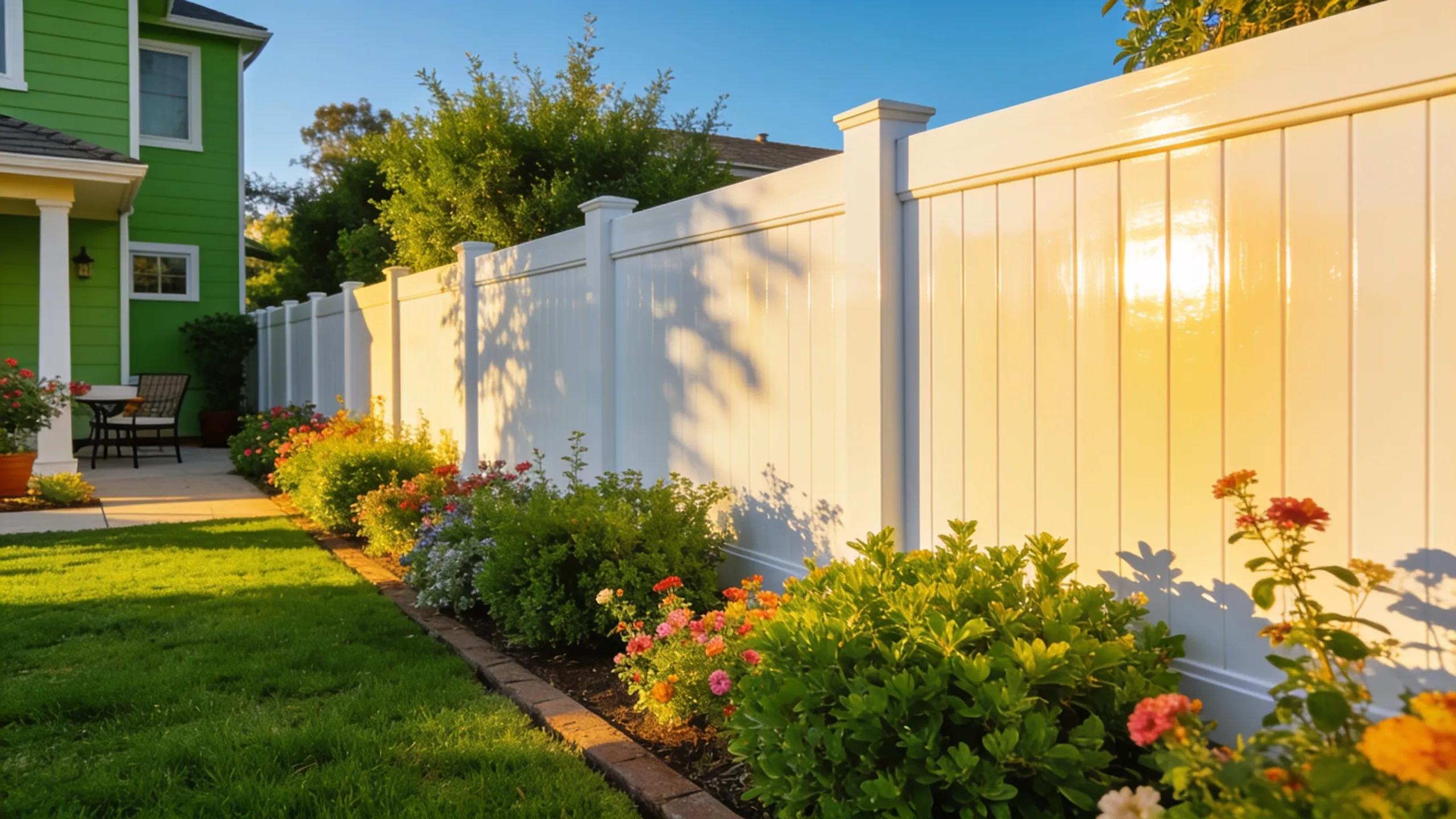


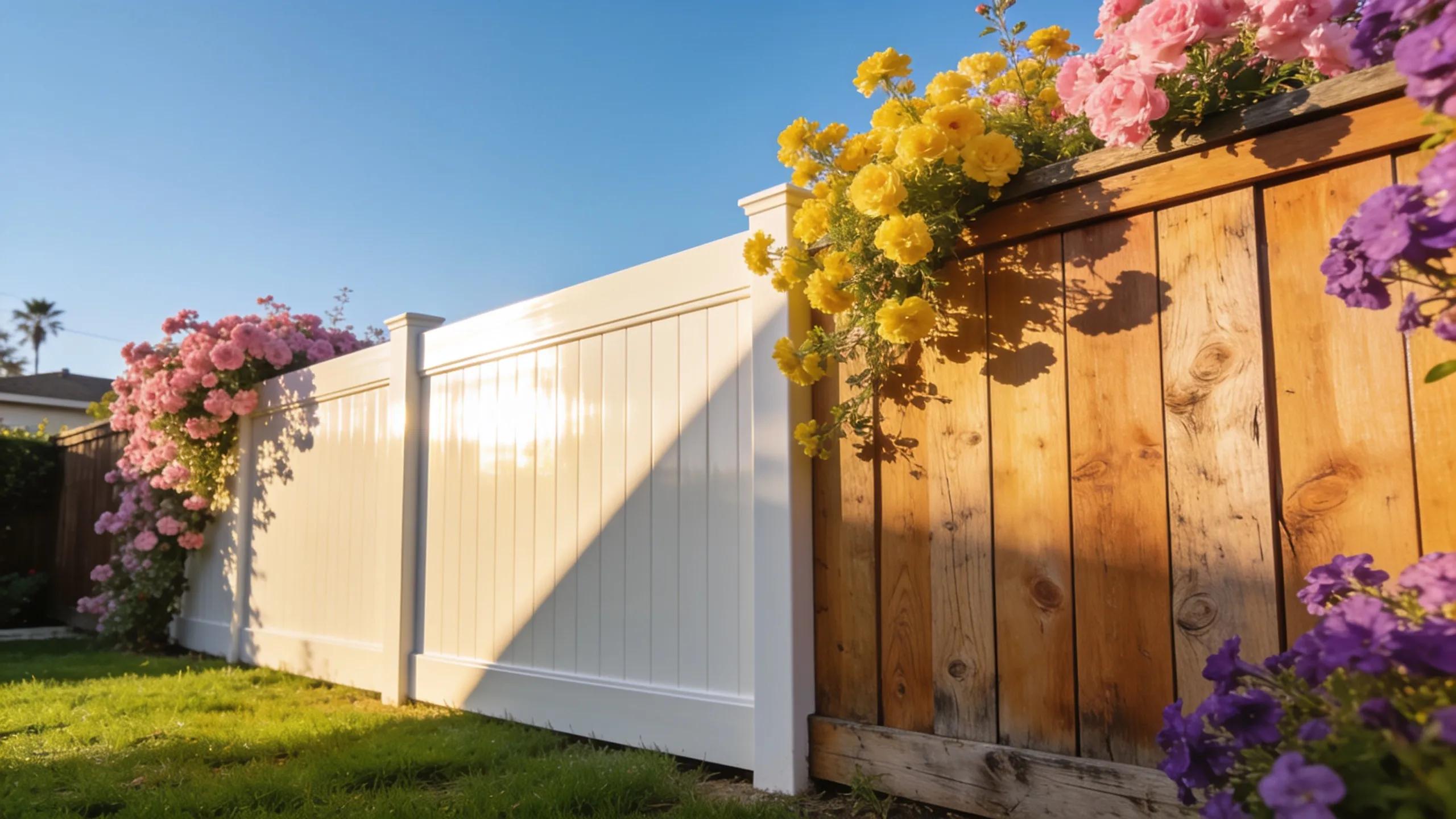
Vinyl Fence vs Wood Fence: Which Lasts Longer? A Detailed Durability and Maintenance Comparison
Selecting the appropriate fencing material affects both your property’s appearance and its long‑term costs. This article compares vinyl and wood on durability and maintenance, with attention to Southern California climate factors, so you can assess long‑term value and care requirements for your site.
Comparison of Vinyl Fences vs. Wood Fences
Vinyl and wood present distinct profiles. Vinyl—increasingly specified in Southern California—is resilient and low maintenance. Wood delivers traditional character but typically requires more frequent care. Each option will influence visual appeal and service life, which in turn affects homeowner satisfaction.
Durability:

Durability is a primary determinant of service life. With proper care, vinyl fences commonly last 20–30 years; wood fences generally require replacement after 10–15 years due to rot, insect activity and moisture damage. Material quality, installation methods and environmental exposure all affect these expected lifespans.
For Southern California properties, vinyl often proves the more durable choice against regional stresses. For professional installation, GNG Vinyl fence provides experienced service.
Maintenance Requirements:

Maintenance demands differ markedly. Vinyl requires minimal upkeep—typically occasional soap‑and‑water cleaning—whereas wood needs regular staining or painting and preventive treatments to resist weathering and decay.
Vinyl’s low‑maintenance profile reduces time and expense for homeowners, making it a practical choice for those who prefer minimal ongoing care.
Which Common Wood Fence Issues Affect Durability and Require Repair?
Wood fences are vulnerable to decay, warping and pest infestation. Regular inspections for splintering and insect damage are necessary. Repairs often involve replacing damaged boards, applying preservatives or installing barriers to limit pest access and extend service life.
How Does the Low Maintenance Need of Vinyl Benefit Homeowners?
Vinyl’s minimal maintenance lowers lifetime ownership costs. Homeowners retain a well‑kept appearance with only occasional cleaning, which supports the material’s value as a long‑term, low‑effort fencing solution.
Factors Influencing Longevity:
Fence longevity depends on material specification, environmental stressors and installation quality. High‑grade PVC vinyl is engineered to resist wind and UV exposure more effectively than typical wood. Correct installation by experienced professionals further enhances durability.
How Does Vinyl Fence Durability Compare to Wood Fence Lifespan?
Vinyl typically outperforms wood regarding durability and expected service life. Reinforced vinyl profiles and quality polymers resist rot and insect damage common to timber. The extended lifespan contributes to improved cost‑effectiveness over time.
What Are the Typical Lifespans of Vinyl and Wood Fences in Southern California?
In Southern California conditions, vinyl fences commonly last 20–30 years, while wood fences usually require replacement within 10–15 years. Heat and low humidity accelerate degradation of wood, whereas vinyl maintains structural and visual integrity for a longer period.
How Do Material Properties of Vinyl Contribute to Its Longevity?
Vinyl’s PVC composition provides strong resistance to moisture and ultraviolet exposure, helping fences remain structurally sound and visually consistent over many years. Many vinyl products incorporate fade‑resistant formulations to preserve colour under prolonged sun.
What Maintenance Is Required for Wood Fences Compared to Vinyl Fences?
Wood demands routine inspection and upkeep. Expect periodic staining or painting and treatments to address pests or rot. Compared with vinyl’s low maintenance, timber requires ongoing effort to preserve performance and appearance.
Which Common Wood Fence Issues Affect Durability and Require Repair?
Wood is especially prone to decay, moisture‑induced warping and pest damage. Consistent maintenance can reduce these risks, but homeowners may still need to replace sections or panels, with frequency depending on local environmental conditions.
How Does the Low Maintenance Need of Vinyl Benefit Homeowners?
Vinyl’s minimal cleaning needs translate into saved time and reduced maintenance expenditure. Occasional washing preserves appearance without the continual investment required for wood.
How Does Professional Fence Installation Impact the Longevity of Vinyl and Wood Fences?
Installation quality has a measurable impact on lifespan. Correct anchoring and alignment prevent vinyl failures; professional wood installation minimises errors that accelerate deterioration. Investing in experienced installers typically extends service life and improves satisfaction.
What Installation Best Practices Ensure Maximum Fence Lifespan?
To maximise longevity, use accurate measurements, select appropriate materials and account for local environmental conditions. Engage installers with regional experience to ensure durable, code‑compliant workmanship.
How Do Cost and Value Over Time Compare Between Vinyl and Wood Fencing?
While vinyl often carries a higher initial cost, its longer service life and lower maintenance costs result in a lower total cost of ownership. Wood generally incurs greater repair and replacement expenses over the same period.
What Is the Initial Price Difference Between Vinyl and Wood Fences?
Vinyl typically costs more per linear foot to install than wood. That upfront premium is frequently offset over time by reduced upkeep and extended service life.
How Do Maintenance Expenses Affect Long-Term ROI for Each Material?
Ongoing maintenance expenses strongly influence long‑term ROI. Regular staining, repairs and potential panel replacement increase timber’s lifetime costs, whereas vinyl’s minimal maintenance maximises return on investment.
What Environmental and Climate Factors Affect Fence Longevity in Southern California?
Southern California’s heat, low humidity and intense UV exposure challenge outdoor fencing. These conditions can accelerate wood decay and fading, while purpose‑formulated vinyl products resist such degradation and provide greater longevity.
How Does Southern California’s Climate Challenge Wood Fence Durability?
High temperatures and dryness accelerate wood deterioration, increasing risks of decay, warping and pest pressure. These climate factors raise maintenance demands for timber fences in the region.
Recognising these performance challenges clarifies why specific materials perform better in particular environments and informs decisions about long‑term viability and environmental impact.
Environmental and Economic Impacts of Wood vs. Simulated Materials
Lifecycle assessment tools from the scientific community—environmental product declarations (EPDs) derived from life cycle assessment (LCA) and life cycle cost assessment (LCCA)—are used to establish and compare the environmental and economic impacts of historic, traditional and simulated materials. These methods quantify the sustainability of historic materials relative to alternatives. The research shows that retaining in‑situ siding produces the lowest environmental impact and is the second most economical option. Installation of new, traditional wood siding has the next lowest environmental impact but is the most expensive method over time. Thus, although simulated materials are often promoted as the most environmentally and economically sustainable, retaining in‑situ siding and … by Another Name: A Comparative Analysis of the Environmental and Economic Costs of Traditional Wood Clapboards, Composite Fiber-Cement Siding, and Vinyl …, 2022
What Advantages Do Vinyl Fences Have Against Local Environmental Stressors?
Vinyl resists moisture and pests and demonstrates strong UV stability, enabling fences to retain structural integrity and appearance longer than wood under local environmental stressors.
What Design and Aesthetic Options Do Vinyl and Wood Fences Offer for Lasting Appeal?
Both materials offer a range of design choices. Vinyl can replicate the look of traditional wood while delivering greater durability; wood provides natural beauty and flexible customisation but requires more maintenance to preserve that appearance.
How Do Customization Choices Impact Fence Durability and Customer Satisfaction?
Customization influences both longevity and homeowner satisfaction. Vinyl can be tailored without compromising structural performance; customised wood designs often demand extra care to maintain their appearance. Personalisation choices therefore affect long‑term outcomes.
What Are Customers Saying About Vinyl Fence Appearance and Durability?
Customers commonly cite vinyl’s attractive appearance and lasting durability, noting they achieve a refined look with considerably less maintenance than wood, which contributes to higher satisfaction levels.
The table underscores the clear differences in expected lifespan and upkeep, explaining why many homeowners opt for vinyl for its durability and low maintenance.
Between vinyl and wood, vinyl provides superior durability and lower maintenance requirements, making it a prudent investment for Southern California homeowners. Reduced upkeep delivers long‑term savings and helps preserve your property’s appearance. For additional options and to determine the most suitable fencing solution for your needs, visit our website and review available products and services to support an informed decision that enhances property value and long‑term confidence.