
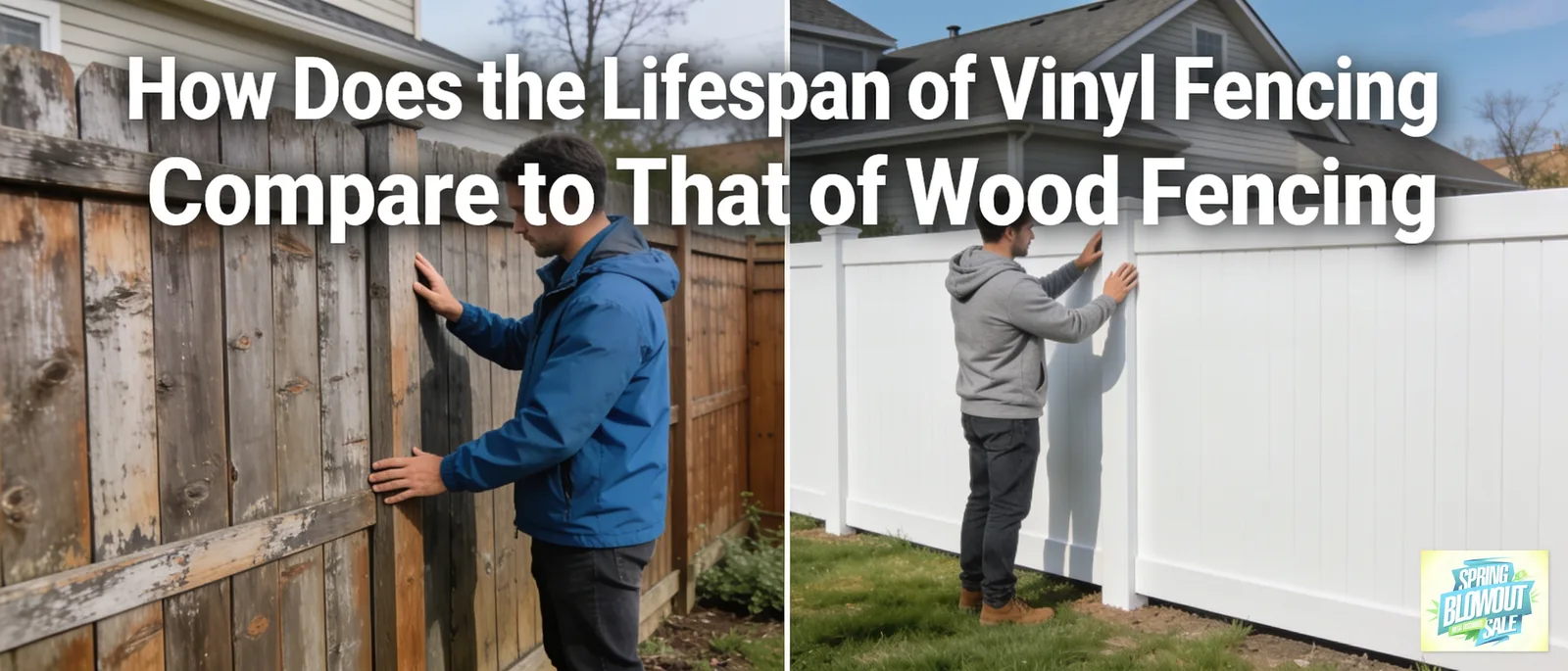


How Does the Lifespan of Vinyl Fencing Compare to That of Wood Fencing
Vinyl fencing outlasts wood, delivering 25-30 years of service compared to wood’s 15-20 years. High-grade PVC vinyl resists warping, rotting, and weathering without staining or repainting. Wood demands regular sealing and repairs to survive the elements. Homeowners seeking durability and minimal upkeep gain more long-term value from vinyl than from traditional wood fencing.
Key Takeaways
- Vinyl fences last 25-30 years compared to wood’s 15-20 year lifespan, extending durability significantly.
- Wood fencing costs $8-25 per linear foot upfront, offering lower initial investment than vinyl.
- Vinyl requires minimal maintenance throughout its lifetime, reducing long-term ownership costs substantially.
- Wood fences demand regular maintenance including staining, sealing, and repairs to prevent deterioration.
Which Fence Really Wins on Durability?
Vinyl fencing wins the durability contest against wood fencing in most cases, often by a significant margin. Wood brings undeniable charm and natural warmth to a property, but that beauty comes with a price: constant upkeep against weather, moisture, insects, and rot. Comparing the lifespan of vinyl fencing to wood fencing — often framed as the question, How Does the Lifespan of Vinyl Fencing Compare to That of Wood Fencing? — reveals a clear pattern — one material ages gracefully, the other fights a slow, steady battle against the elements.
Wood fences need regular staining, sealing, and board replacement to hold their appearance. Skip that maintenance, and warping, splintering, and insect damage set in fast. Vinyl fencing built from high-grade PVC resists warping. Weathering that would otherwise tarnish a home’s curb appeal, holding its shape and color season after season.
Do wood fences really need that much maintenance?
Yes. Wood’s vulnerability to moisture and pests means ongoing attention is not optional. Left untreated, boards rot, posts loosen, and insects burrow into the structure, shortening the fence’s usable life considerably.
Why does vinyl fencing hold up better over time?
Vinyl’s PVC construction simply does not feed insects, absorb water, or rot the way wood does. That resistance translates directly into fewer repairs and a longer stretch of years between fence upgrades.
Every rail, post, and panel produced carries a comprehensive lifetime warranty, backing up the promise of lasting, dependable performance for homeowners who want a fence that stays put.

How Long Does Each Fence Actually Last?
Vinyl fencing lasts 25 to 30 years. Wood fencing holds up for 15 to 20 years under typical residential conditions. That gap matters more than the sticker price on installation day. A fence torn out at year 18 costs a homeowner a full replacement cycle that vinyl simply skips.
The lifespan of vinyl fencing compared to wood fencing comes down to how each material ages. Wood absorbs moisture, warps, and eventually rots or splinters, forcing repairs or full replacement well before the two-decade mark. Vinyl resists that decline, holding its shape and color for a decade or more beyond wood’s outer limit.
Why does vinyl outlast wood by so much?
Vinyl fencing eliminates the staining and repair expenses that quietly drain a wood-fence budget year after year. Those savings compound, tilting the long-term value equation firmly toward vinyl even when wood costs less upfront.
Does low maintenance really extend a fence’s usable life?
Yes, a fence that never needs sanding, sealing, or board replacement simply degrades slower. Homeowners across the country have shifted their property lines to low-maintenance vinyl solutions for exactly this reason. Fence extensions built from vinyl carry the same advantage, offering durability that traditional wood add-ons cannot match. For anyone comparing decades of ownership rather than a single season, that difference decides the outcome.

What Maintenance Does Each Material Require?
Vinyl demands almost nothing beyond an occasional rinse, while wood requires ongoing attention to stay presentable. That gap defines the true cost of ownership for either material over the years homeowners plan to keep their fence standing.
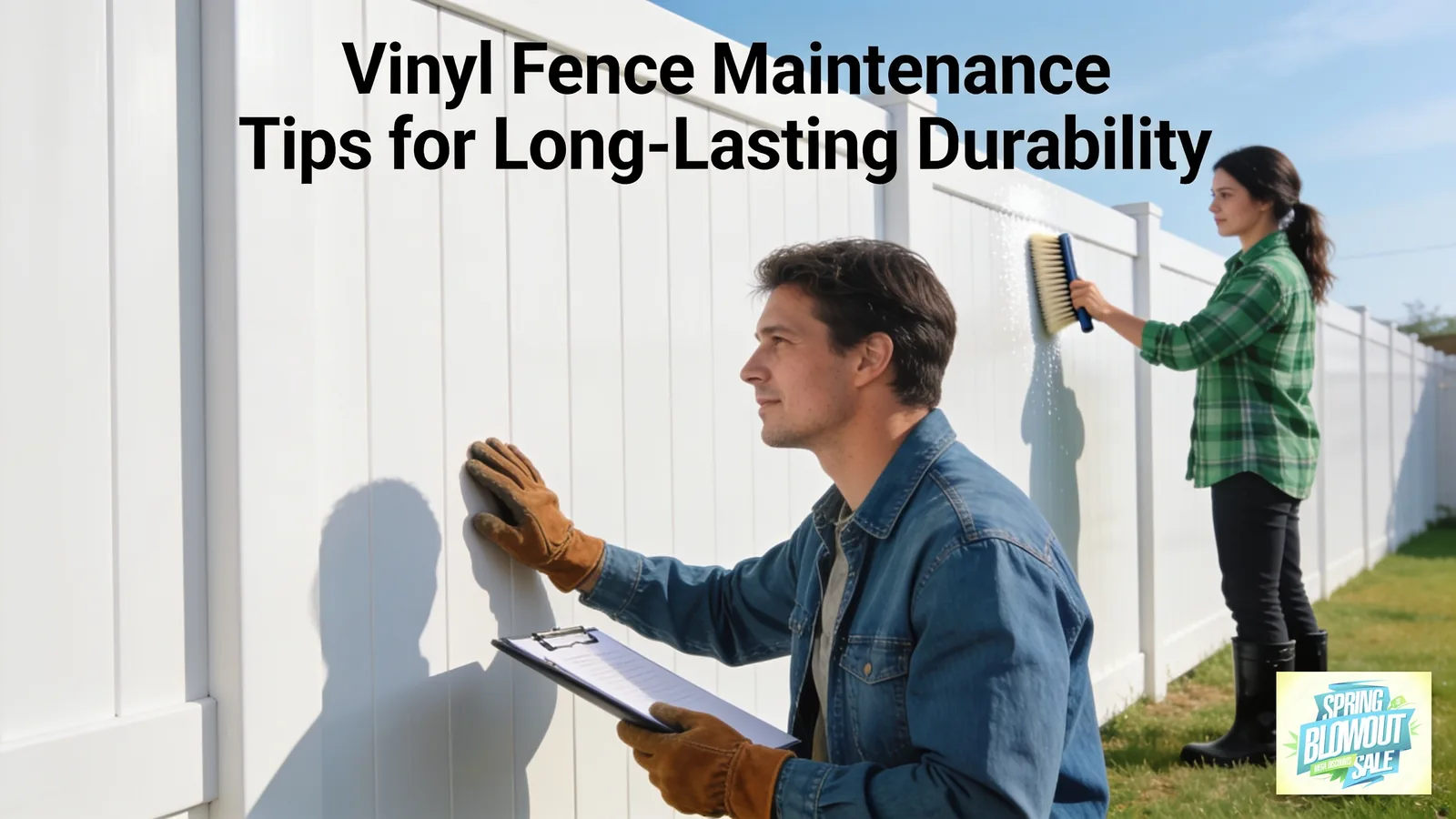
Vinyl fencing and its accessories hold up against sun, rain, and temperature swings without cracking or fading. Because these products are made from high-grade PVC, extensions and toppers resist weather damage and skip the need for repeated painting or sealing. A homeowner installs once and moves on with life, without circling back every season to touch up a panel.
Wood fencing offers something vinyl cannot match: full customization of height, style, and finish. That flexibility lets homeowners personalize a yard’s look and boost curb appeal. But every custom detail — a stained cedar picket, a hand-cut post cap — comes with a maintenance bill attached, since exposed wood grain absorbs moisture and sun damage over time.
Does vinyl ever need painting or touch-ups?
Not for durability, but for style. Vinyl fences stay structurally sound without paint. A fresh coat or stain applied to decorative lattice or a privacy screen sharpens the visual pop of the design. It’s a cosmetic choice, not a repair chore.
Can homeowners raise fence height without a full rebuild?
Yes. Fence toppers offer a straightforward way to add height to an existing fence line without tearing out the original structure. This works well for homeowners who want more privacy or a taller boundary without the labor and cost of a complete replacement.
How Do Weather and Pests Affect Each Fence?
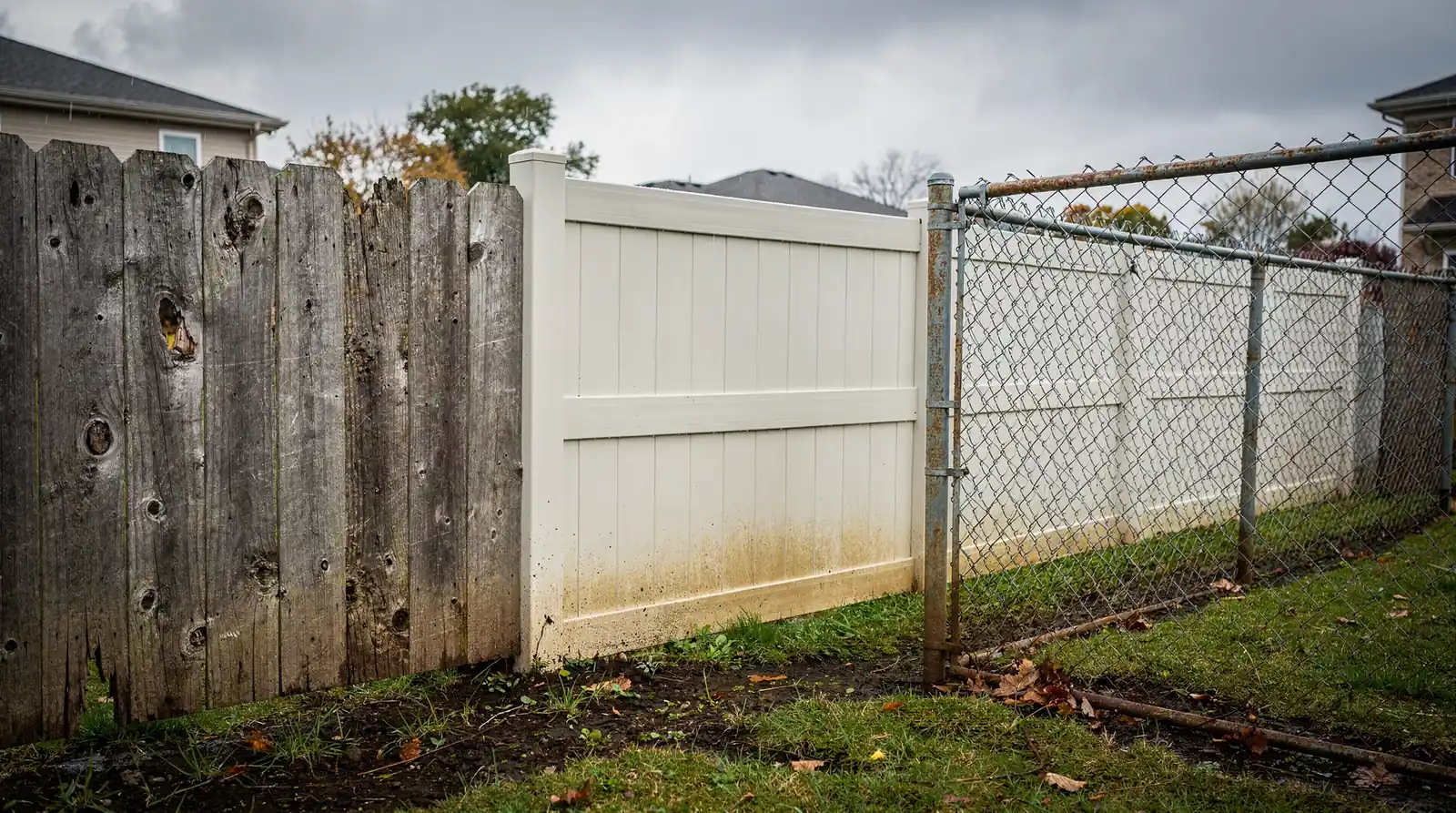
Weather and pests wear down wood fences steadily, while vinyl panels resist most of the same threats by design. Wood fences remain vulnerable to weather, moisture, insects, and rot over time, gradually shortening the material’s usable life. Vinyl fencing is engineered to resist many of the problems that commonly shorten the lifespan of a wood fence, giving homeowners a sturdier long-term option.
Rain, humidity, and sun exposure attack wood fibers year after year. Left unchecked, that exposure invites the following problems:
- Swelling and warping from moisture absorption
- Termite and carpenter ant infestations
- Fungal rot at posts and ground contact points
- Sun bleaching and surface cracking
Do Insects Damage Vinyl Fencing?
Insects rarely cause structural harm to vinyl fencing. Since vinyl panels contain no organic wood fiber, termites and carpenter ants have nothing to feed on. That single difference removes one of the most costly, recurring headaches wood fence owners face season after season.
Can Fence Extensions Also Withstand the Elements?
Vinyl fence extensions hold up under the same weather stress as the base fence. Built from high-quality PVC, these extensions resist harsh weather conditions without demanding frequent painting or sealing. Many also include a warranty, giving homeowners added assurance that their investment stays protected for years to come.
Which Fence Fits Your Long-Term Plans?
Long-term plans determine which fencing material makes sense for a given property. Wood suits homeowners who value natural beauty and design flexibility and who commit to regular staining and repair. Vinyl suits homeowners who prioritize convenience, durability, and minimal upkeep over decades of ownership.
Comparing vinyl fencing lifespan versus wood fencing lifespan starts with a simple question: how much maintenance does a household want to perform?
How long does each fencing material typically last?
Wood fencing demands sanding, sealing, and repainting on a recurring schedule to resist rot, insects, and weather damage. Vinyl fencing resists moisture and pests by design, which reduces the repair cycle significantly. Skipping maintenance on wood shortens its usable life; vinyl holds its structure and color with far less attention.
Which option costs less over the life of a fence?
Wood carries a lower upfront price but accumulates staining, sealing, and board-replacement costs across the years. Vinyl costs more initially but avoids most of those recurring expenses, making it the stronger long-term value for budget-conscious homeowners.
GNG Vinyl supports either path. Homeowners updating an aging wooden fence. Extending a PVC fence for added privacy, can add a privacy fence extension without replacing the entire structure. Design options range from privacy panels to decorative lattice, covering nearly any aesthetic or functional goal a property calls for. Homeowners looking to enhance their outdoor living space further can also explore vinyl decks as a complementary addition.
FAQ
How long does vinyl fencing last compared to wood?
Vinyl fencing lasts 25-30 years, while wood fencing lasts only 15-20 years under typical residential conditions. This gap means wood often faces a full replacement cycle that vinyl skips entirely.
Which fencing material requires less maintenance?
Vinyl fencing requires minimal upkeep throughout its lifetime since PVC resists warping, rotting, and weathering without staining or repainting. Wood demands regular sealing, staining, and repairs to prevent deterioration from moisture and pests.
Is wood fencing cheaper than vinyl upfront?
Yes, wood fencing costs $8-25 per linear foot, offering a lower initial investment than vinyl. However, vinyl reduces long-term ownership costs by requiring substantially less maintenance over its lifespan.