




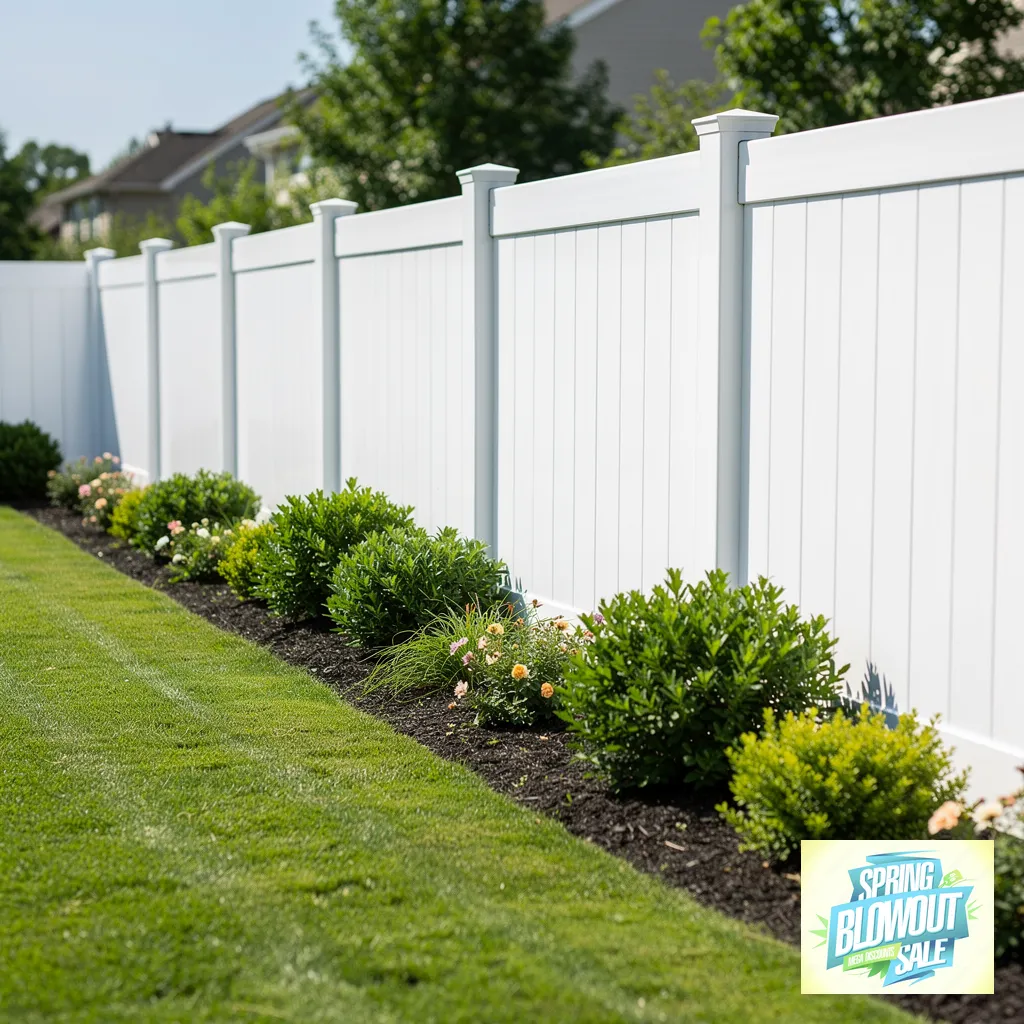
How to Maintain a Vinyl Fence and Keep It Looking New
A vinyl fence is prized for its durability and low upkeep, but “low maintenance” doesn’t mean “no maintenance.” A simple seasonal care routine keeps a vinyl fence bright, structurally sound, and free of the grime, mold, and mildew that dull its appearance over time. This guide walks homeowners through practical vinyl fence maintenance steps — from routine cleaning to stain removal and minor repairs — so the fence continues to perform and look its best for years to come.
Why Vinyl Fence Maintenance Matters
Vinyl resists rot, rust, and pests far better than wood or metal, but it still faces exposure to sun, rain, pollen, dirt, and airborne mold spores. Left unaddressed, these elements can leave a vinyl fence looking dingy or discolored, even though the material itself remains structurally intact. A consistent vinyl fence care routine protects the surface finish, preserves curb appeal, and helps homeowners catch small issues — like a loose panel or a hairline crack — before they become costly repairs.
How to Clean a Vinyl Fence

Cleaning a vinyl fence is straightforward and typically requires only a few common supplies.
What You’ll Need
- A garden hose with a spray nozzle
- A soft-bristle brush or non-abrasive sponge
- A bucket
- Mild dish soap or a dedicated vinyl fence cleaning solution
- White vinegar (for mold and mildew spots)
Step-by-Step Cleaning Process
- Rinse the fence. Use a hose to remove loose dirt, pollen, and cobwebs from both sides of the fence.
- Mix a cleaning solution. Combine warm water with a few drops of mild dish soap in a bucket. For tougher grime, a vinyl fence cleaning solution formulated for PVC surfaces works well without damaging the finish.
- Scrub in sections. Work from top to bottom with a soft-bristle brush, paying extra attention to corners, seams, and post caps where dirt tends to collect.
- Rinse thoroughly. Hose down each section immediately after scrubbing so soap doesn’t dry and leave streaks.
- Let it air dry. Vinyl dries quickly in open air; avoid direct sunlight scrubbing on very hot days, as soap can dry before it’s rinsed.
Cleaning a vinyl fence two to four times a year is generally enough to maintain its appearance, with additional spot cleaning as needed.
How to Keep a Vinyl Fence White
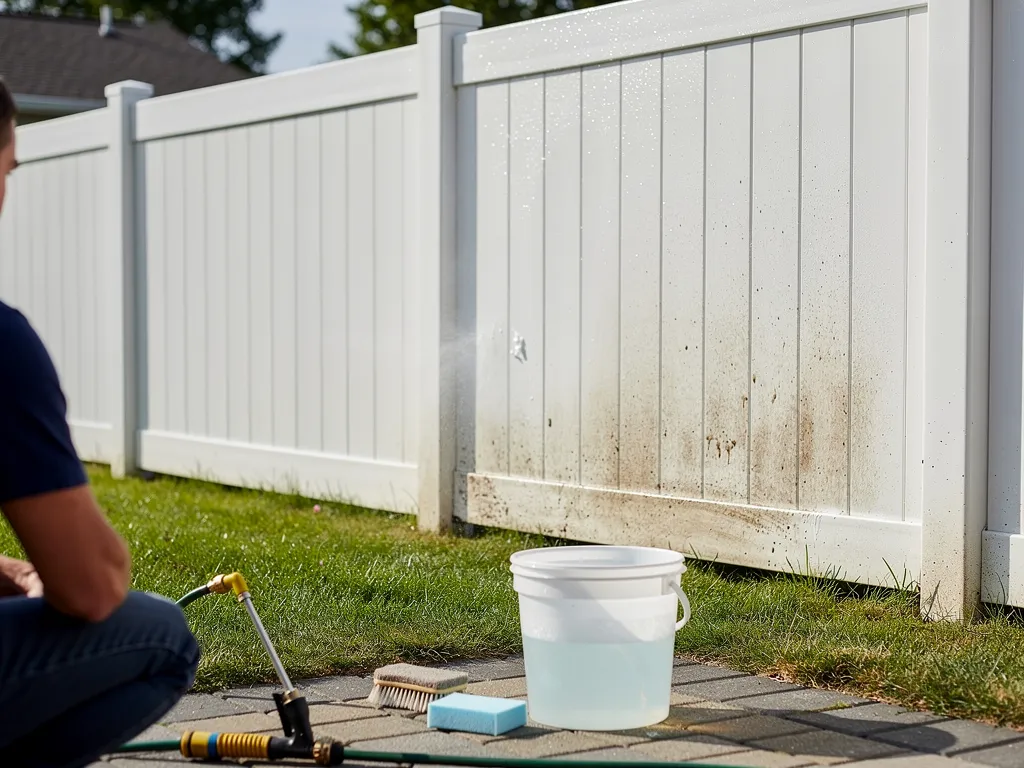
White vinyl fencing shows dirt and discoloration more visibly than colored panels, so a few extra habits go a long way.
- Clean on a regular schedule rather than waiting for visible buildup — light, frequent cleaning prevents deep staining.
- Address stains quickly. Grass stains, mud splashes, and grill sre easier to remove before they set into the surface.
- Use a magic eraser or non-abrasive scrub pad on stubborn marks like scuffs or crayon.
- Avoid harsh abrasives. Steel wool, abrasive powders, or stiff wire brushes can scratch the surface and dull the finish, making future staining worse.
- Trim nearby vegetation so grass, mulch, and soil don’t splash or rub against fence panels during mowing or heavy rain.
Vinyl Fence Mold and Mildew Removal

Mold and mildew are common in shaded, humid, or poorly ventilated areas of a yard, and they can leave greenish-black spots on vinyl surfaces. To remove them:
- Mix a solution of one part white vinegar to four parts water, or use a commercial mildew remover labeled safe for vinyl.
- Apply the solution directly to affected areas and let it sit for 10–15 minutes.
- Scrub gently with a soft-bristle brush.
- Rinse thoroughly with a hose.
- For persistent spots, a diluted oxygen bleach solution can be used — always spot-test in an inconspicuous area first.
Improving airflow around shaded fence sections, and keeping sprinklers from hitting the fence directly, helps prevent mold and mildew from returning.
Vinyl Fence Repair Basics
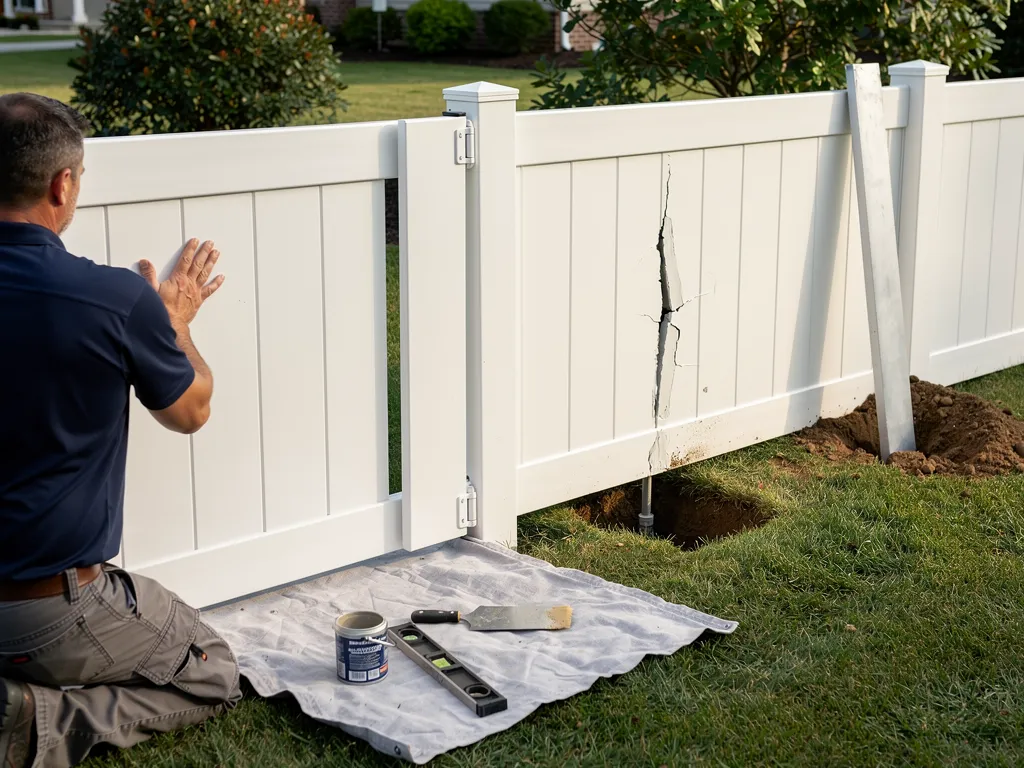
Vinyl fencing is built to last, but occasional repairs may still be needed:
- Loose panels or rails: Check that panels are properly seated in their brackets; tighten or reset as needed.
- Cracks or holes: Small cracks can often be filled with a vinyl repair compound designed to match the panel color; larger damage typically calls for panel replacement.
- Leaning posts: A post that has shifted may need the surrounding soil or concrete footing reset to restore stability.
- Discoloration that won’t clean off: Persistent yellowing in older vinyl may indicate it’s time for a replacement section rather than continued cleaning.
For repairs beyond basic DIY fixes, Gng Vinyl’s team can assess the fence and recommend the right solution to restore both function and appearance.
Seasonal Fence Maintenance Checklist

Building vinyl fence care into a seasonal routine keeps small tasks manageable and prevents buildup.
Enjoy a Vinyl Fence That Looks New for Years
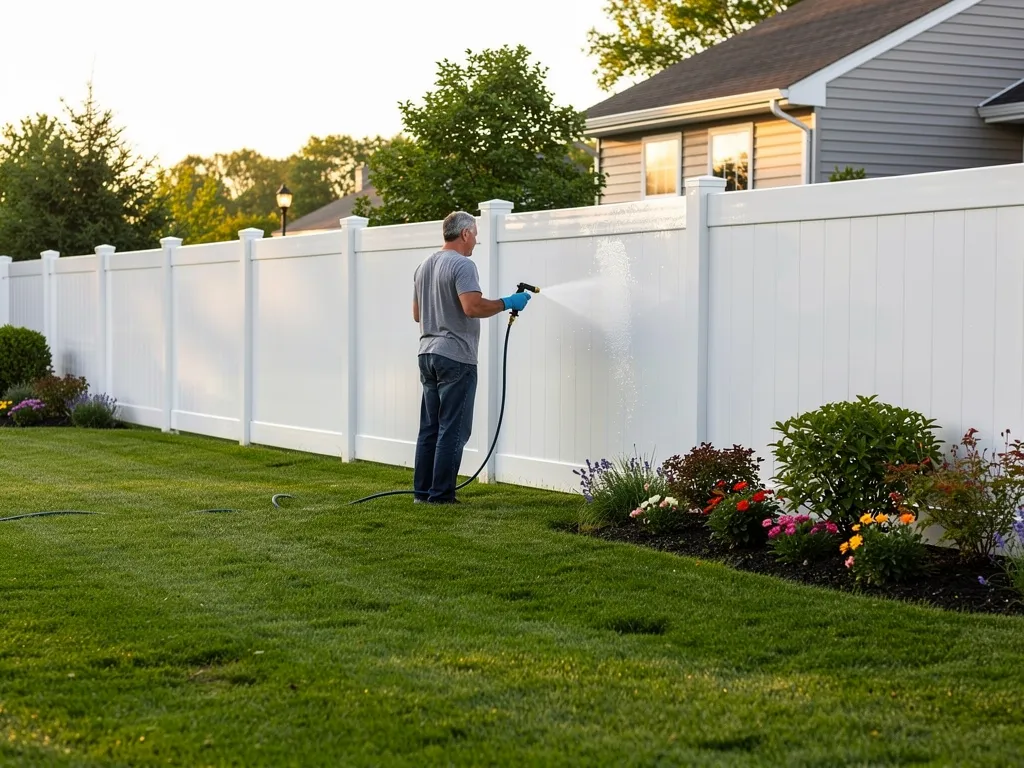
With a simple routine of regular rinsing, prompt stain removal, and seasonal inspections, a vinyl fence can maintain its clean, bright appearance and structural integrity well beyond what many homeowners expect. These vinyl fence care tips require minimal time investment but pay off in lasting curb appeal and fewer repair costs down the road.
Homeowners who want a professional assessment, repair, or a closer look at vinyl fencing options can reach GNG Vinyl at +1 (323) 543-7577 or reception@gngvinyl.com.